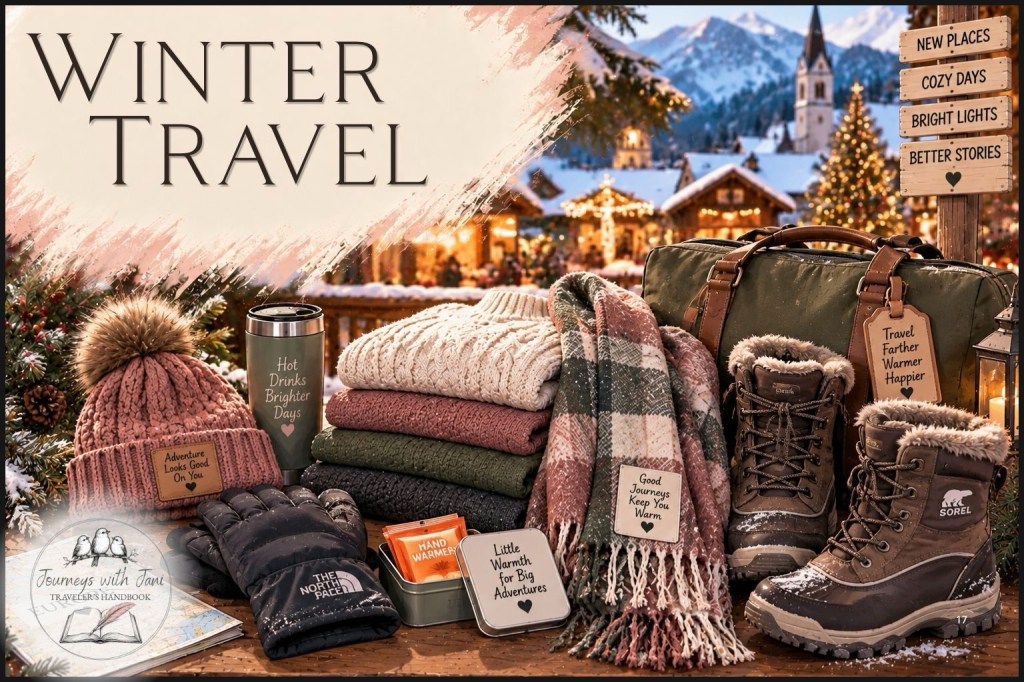
Winter Winter Winter
In 10 Seconds: Winter packing goes wrong when people either overpack bulky items that eat all their luggage space, or underestimate just how differently cold weather behaves in a mountain town versus a European Christmas market versus a ski resort. Layering strategically, not just packing heavy, is what actually keeps you warm and your suitcase manageable.
You’ll Learn:
- Why layering beats one heavy coat every time
- What actually keeps hands, feet, and heads warm
- The winter items people forget until they’re standing outside without them
- How destination and activity change the whole packing list
Layering Beats Bulk
A single giant coat takes up enormous suitcase space and only gives you one temperature setting. Three thinner layers, a moisture wicking base layer, an insulating middle layer like fleece or a light puffer, and a weatherproof outer shell, give you the ability to adjust throughout a day that might start freezing and end up comfortable indoors by a fire. This system also compresses down far smaller in a suitcase than a single bulky coat does, since each individual layer packs flatter on its own.
🧤 Jani’s Tip: Merino wool base layers are worth the investment if winter travel is a regular thing for you. They regulate temperature better than cotton, don’t hold odor the way synthetic fabrics can over a multi-day trip, and pack down small.
Hands, Feet, and Heads Lose Heat Fastest
A good pair of insulated, waterproof boots matters more than almost anything else on a winter trip, since cold, wet feet will ruin a day faster than any other single discomfort. Break them in before you travel, the same rule as summer walking shoes applies here too. Wool or thermal socks, not just your regular cotton pair, make a real difference, and packing an extra pair or two means you’re never stuck in damp socks after a snowy walk.
Gloves that are actually warm, not just decorative, and a hat that covers your ears fully are both easy to underestimate until you’re standing outside a Christmas market wondering why your ears hurt. A scarf or neck gaiter blocks wind from getting down your collar, which is often where cold actually gets in, more than people expect.
The Items People Forget Until They’re Standing Outside
Lip balm and a heavier moisturizer than you’d use at home, cold air and indoor heating both dry out skin fast, and most people don’t think about it until their hands or lips are already cracked. Hand warmers, the small disposable kind, take up almost no space and are a genuine lifesaver on an outdoor excursion that runs longer than expected. Sunglasses, yes, even in winter, since snow reflects sunlight aggressively and a bright winter day at altitude can be surprisingly hard on your eyes.
A small travel umbrella or a hood on your outer layer matters more in winter destinations that get sleet and cold rain rather than snow, which is a wetter, more miserable cold than a dry snowy climate.
🧣Jani’s Tip: If you’re heading somewhere with real winter weather and you don’t own proper cold weather gear at home, it’s often smarter to buy or rent key pieces once you arrive, especially boots, rather than spend money on gear you’ll use once and never again.
How Destination and Activity Change the List
A European Christmas market trip calls for warm, stylish layers built for walking outside for hours at a stretch, but not necessarily technical ski gear. A ski or snowboard trip requires genuinely technical outerwear, waterproof and insulated at a level regular winter coats don’t match, plus gear specific items like goggles and proper snow gloves. A winter cruise to somewhere like Alaska needs layers for cold outdoor viewing on deck but a warm ship interior, so easy layer removal matters as much as warmth itself.
Always check the specific climate and elevation of your destination rather than assuming “winter” means the same cold everywhere. Dry cold, wet cold, and windy cold all call for slightly different gear priorities.
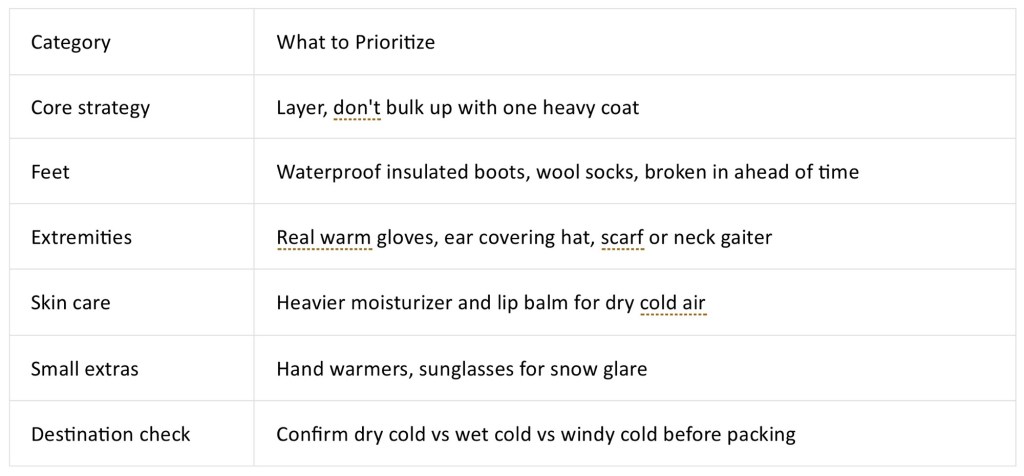
Quick Reference
One Last Thing…
Winter travel done right doesn’t mean hauling a suitcase full of bulky sweaters and hoping for the best, it means understanding exactly what kind of cold you’re walking into and layering smart for it. I help clients figure out what a specific winter destination actually demands, since a ski trip, a Christmas market, and a winter cruise are three completely different packing lists wearing the same season.
Ready to plan a winter trip you’ll actually be warm for? Let’s talk it through.
XOXO, Jani ~ Personal Travel Advisor | Take Time To Travel, LLC
Updated September 2026.
Related Traveler’s Handbook Articles
Before You Go
Packing
Seasonal Travel
 Journeys With Jani: Traveler’s Handbook
Leave a comment