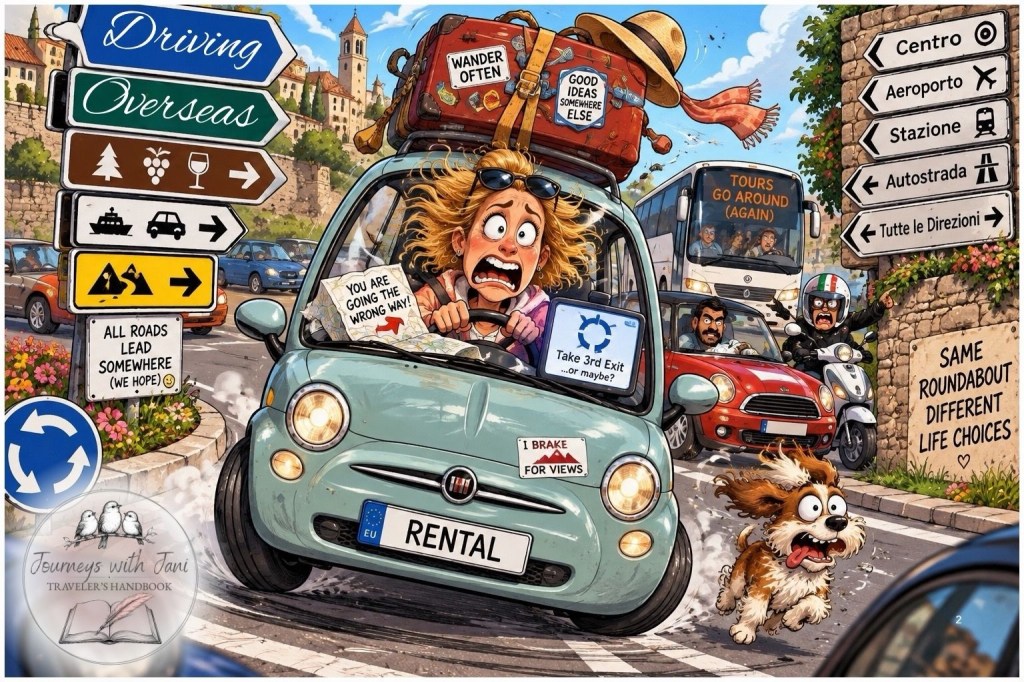
Which Side is the Right Side?
In 10 Seconds: Renting a car and driving yourself around a foreign country sounds like the ultimate freedom, and sometimes it genuinely is. Other times it’s a stressful lesson in roundabouts, manual transmissions, and road signs that assume you already know what they mean. Here’s what to actually think through before you commit to driving overseas instead of letting someone else handle it.
You’ll Learn:
- What license and paperwork you actually need
- Where driving overseas makes sense, and where it doesn’t
- The differences that catch American drivers off guard
- What insurance actually covers, and what it usually doesn’t
The License and Paperwork Question
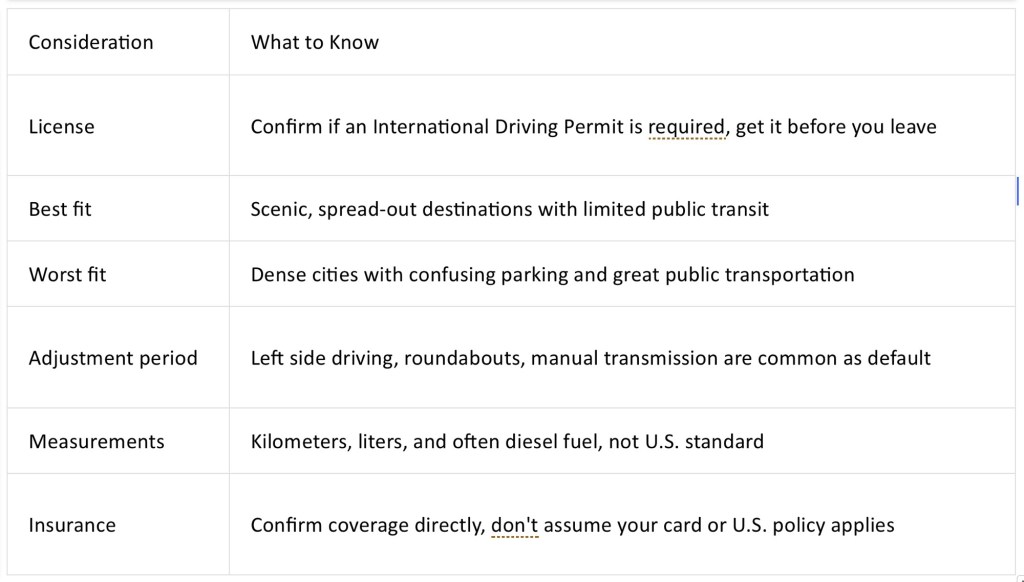
Many countries require an International Driving Permit alongside your regular U.S. license, which is a simple, inexpensive translation document, not a separate driving test, available through AAA in the U.S. before you travel. Some countries accept a U.S. license alone, some require the permit as well, and the rules genuinely vary by country, so this is worth confirming specifically for where you’re headed rather than assuming last year’s trip’s rules still apply somewhere new.
Rental car companies overseas can be stricter about this than you’d expect, and showing up without the correct paperwork can mean being turned away at the counter after you’ve already paid, with no guarantee of a refund.
🚘 Jani’s Tip: Get your International Driving Permit before you leave the States. It cannot be obtained once you’re already at your destination, and it’s a quick errand at home that saves a real headache abroad.
Where Driving Overseas Makes Sense, and Where It Doesn’t
Driving yourself genuinely shines in destinations built around scenic routes and countryside exploring where public transportation is limited, Ireland’s coastal roads, parts of Scotland, the Amalfi Coast if you’re comfortable with narrow cliffside driving, New Zealand, and similar spread out, less densely connected regions. The freedom to stop wherever catches your eye is a real and wonderful thing in the right setting.
It makes far less sense in major European cities with excellent public transportation, confusing one-way systems, and limited or expensive parking, Rome, Paris, and London chief among them. It also tends to backfire in countries where road signs, driving customs, or traffic patterns are dramatically different from home and the learning curve outweighs the convenience for a short trip.
🚙 Jani’s Tip: I often recommend a hybrid approach for clients, train or transfer into a city, rent a car only for the countryside portion of a trip, then return it before heading back into dense urban driving. Best of both worlds, worst of neither.
What Catches American Drivers Off Guard
Left side driving in countries like the UK, Ireland, Australia, and Japan is the obvious one, but the adjustment goes beyond just which side of the road, roundabouts function differently, and the instinct to check the wrong mirror or drift toward the wrong lane takes real conscious effort for the first day or two. Manual transmission is still the default rental option in a lot of countries, with automatic cars costing more and sometimes requiring advance booking specifically, so confirm this ahead of time if you can’t comfortably drive a manual.
Road signs abroad often rely on symbols and pictograms rather than the worded signs Americans are used to, and speed limits, distances, and fuel are typically measured in kilometers and liters, not miles and gallons, which matters more than people expect when trying to judge how far the next exit or gas station actually is.
Toll systems, congestion charges in certain cities, and fuel type differences, diesel is far more common in European rental cars than in the U.S., are all small details that can turn into real problems if you’re not expecting them.
What Insurance Actually Covers
Your regular U.S. auto insurance and even many credit card rental protections often do not extend overseas, or extend with significant limitations you won’t discover until you actually need them. Purchasing the local rental company’s insurance, even though it adds to the cost, is often the smarter move for international driving specifically, since a claim dispute in a foreign country with a policy written for domestic use is not a fight anyone wants to have from thousands of miles away.
🚔 Jani’s Tip: Always call your specific credit card company and ask directly about international rental coverage before assuming it applies. The details vary more than people expect, and “my card usually covers this” has cost more than one traveler real money.
Quick Reference
One Last Thing…
Driving overseas can be one of the most memorable parts of a trip, or one of the most stressful, and the difference usually comes down to whether it actually fits the destination and whether you went in prepared. I help clients figure out where self-driving genuinely adds to the trip and where a driver, train, or transfer makes a lot more sense.
Ready to plan the right kind of road trip, wherever it takes you? Let’s talk it through.
XOXO, Jani ~ Personal Travel Advisor | Take Time To Travel, LLC
Updated September 2026. Driving requirements, insurance rules, and permit regulations vary by country and change over time, always confirm current requirements directly with official sources before your trip.
Related Traveler’s Handbook Articles
Packing
 Journeys With Jani: Traveler’s Handbook
Leave a comment