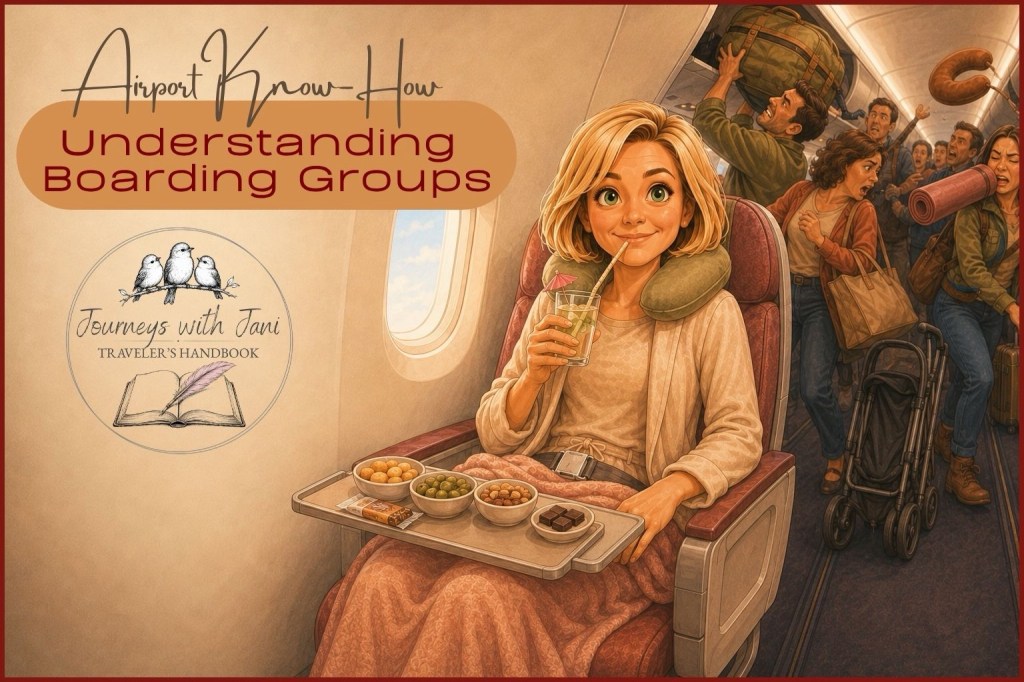
Boarding Groups – Stop Crowding the Gate
In 10 Seconds
Boarding groups look like chaos but they’re not random, they’re a system, and once you understand how it works you’ll stop crowding the gate five groups before your number is called. Know your group, know your airline’s quirks, and know that standing in the wrong line doesn’t actually get you on the plane any faster.
You’ll Learn
- Why boarding groups exist in the first place
- How the major airlines actually order their groups
- What determines your group, and what you can do to move up
- The one boarding habit that annoys gate agents more than anything else
Why Boarding Groups Exist At All
Boarding an entire plane in a truly random order would be a mess, so airlines break it into groups to keep the line moving and the overhead bins from turning into a wrestling match. The logic behind the order isn’t sentimental, it’s practical, airlines want people with more bags, more seniority, or more money boarding first, because that’s who they most need to keep happy and who’s most likely to need bin space before it disappears.
Every airline structures it a little differently, but the underlying idea is the same everywhere, priority goes to whoever the airline has the most reason to prioritize, whether that’s a first class ticket, a credit card, or years of loyalty.
Jani’s Tip ❤️: I tell clients to think of boarding groups less like “who’s more important” and more like “who the airline promised something to.” Once you see it that way, the order actually makes sense.
How the Order Usually Works
Most airlines follow a similar shape even if the group names differ. First to board are usually active duty military, families with small children on some carriers, and passengers who need extra time or assistance. Right behind them come first class and business class passengers, followed by top tier elite frequent flyers. After that, boarding works its way down through mid tier elite status, credit card holders with priority boarding perks, and passengers who paid for early boarding as an add on. Everyone else gets called in numbered groups, usually based on when they checked in or booked, with basic economy or the last group boarding dead last.
The exact letters and numbers vary. Some airlines use Group A through Group E, others use Zones 1 through 9, and a few have their own naming altogether. The system underneath is nearly always the same logic, just wearing a different label.
Quick Reference
Boards First Why Military, families needing assistance, pre-boarding Airline policy and practical need First and business class Paid for priority as part of the fare Top tier elite status Loyalty program benefit Mid tier elite, priority credit card holders Loyalty program or card benefit Early bird or paid boarding upgrade Purchased add on General boarding groups Usually tied to check in time or fare class Basic economy Lowest fare tier, boards last
What Actually Moves You Up
If you want a better boarding group without upgrading your seat, there are a few realistic paths. Certain credit cards include priority boarding as a benefit, which is worth checking if you’re already carrying one. Airline loyalty status helps, and it builds the more you fly a particular carrier, even at the lower tiers. Some airlines sell early boarding as a standalone add on at checkout, usually for less than the cost of checking a bag, which can be worth it if overhead space matters more to you than the extra ticket cost. And simply checking in the moment the window opens, for airlines that assign groups by check in time, can bump you up a group or two without spending a dime.
Jani’s Tip ⏰: When I book a client’s flight, I set a reminder for the exact minute check in opens if their airline assigns boarding by check in time. That one habit alone has moved people up a full group.
The Habit That Drives Gate Agents Crazy
Crowding the boarding door before your group is called doesn’t get you on the plane any faster, it just creates a wall of people the actual current group has to squeeze past. Gate agents notice, and it’s the single most common thing that slows a boarding process down. If your group hasn’t been called, there’s no advantage to standing at the door, you’ll board just as fast from your seat the moment your number comes up.
One Last Thing…
Boarding groups seem simple until you’re staring at a boarding pass with a letter and number combination that means something different on every airline, and trying to figure out if that credit card perk actually applies to this particular flight. It’s exactly the kind of small detail that’s easy to get wrong and mildly annoying to sort out mid-trip, which is why I handle it before my clients ever get to the gate.
One page at a time, we’re building a smarter way to travel. If you’d rather I just take the guesswork out of it, that’s what I’m here for. taketimetotravelga.com
XOXO, Jani ~ Personal Travel Advisor | Take Time To Travel, LLC
Updated August 2026. Boarding group structures and perks vary by airline and change periodically, always confirm current policy with your airline before you travel.
Related Traveler’s Handbook Articles
Airport Know-How
- What to Do During Flight Delays
- Airport Lounges, Are They Worth the Money?
- Connecting Flights Without Panic
- Flying During the Holidays
On the Plane


Leave a Reply