America’s National Parks
In 10 Seconds: America’s national parks are some of the best road trip destinations on earth, and also some of the easiest to plan badly. Between timed entry systems, permits, and crowds that rival a theme park in peak season, a little strategy turns a national park road trip from a stressful scramble into the kind of trip people build their whole year around.
You’ll Learn:
- Why national parks are such natural road trip anchors
- The reservation and permit systems that catch people off guard
- How to actually beat the crowds without waking up at 3am every day
- What to know before you go, regardless of which park you’re headed to
Why National Parks Make Such Good Road Trip Anchors
A national park gives a road trip a built in destination and a built in reason to slow down, which is exactly what separates a great road trip from a long stressful drive between hotel rooms. Many parks also sit within a reasonable drive of several others, which is how a single trip out west can turn into a loop through three or four parks instead of a single stop, without adding much extra driving relative to the ground you’re already covering.
The variety across the park system is enormous, red rock desert, alpine peaks, geothermal wonders, coastal cliffs, which means a national park road trip can be tailored almost entirely to what your group actually wants out of it, hiking, wildlife, photography, or just genuinely stunning scenery from the car window.
🚘 Jani’s Tip: If this is your first national park road trip, pick one park and do it well rather than trying to chain together five parks you’ll only spend a few rushed hours in each. You’ll remember the trip better, and honestly you’ll come home wanting to plan the next one.
The Reservation and Permit Systems That Catch People Off Guard
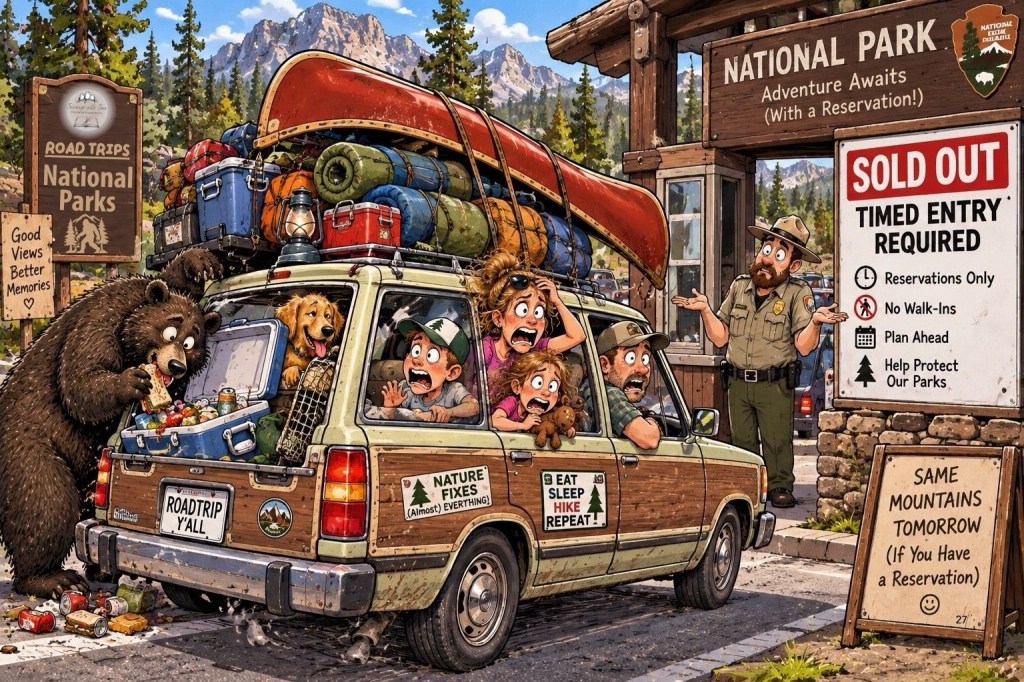
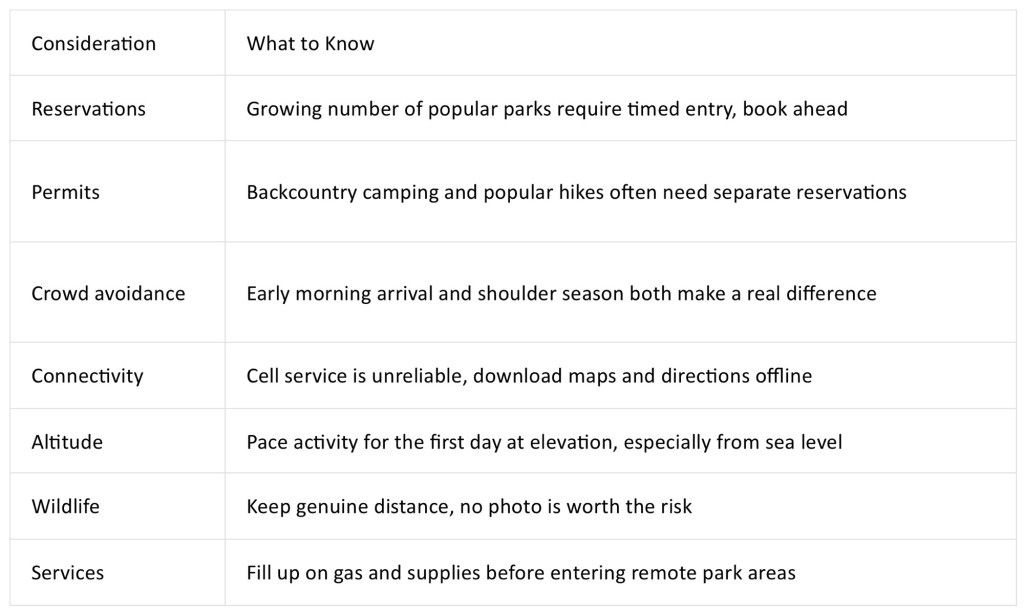
A growing number of popular national parks now require timed entry reservations during peak season, and these can book out weeks or even months ahead. This has genuinely surprised a lot of travelers who assumed a national park worked the way it always has, show up, pay at the gate, go on in. That’s still true for plenty of parks, but for the busiest ones during peak months, showing up without a reservation can mean being turned away entirely, not just facing a longer line.
Backcountry camping, certain trailheads, and popular permits for specific hikes often require their own separate reservation system, sometimes released on a specific date months in advance, sometimes via lottery. If there’s a specific bucket list hike or experience driving the trip, research its exact reservation system well before you’re anywhere near booking flights or hotels around it.
🚘 Jani’s Tip: Reservation systems and requirements change fairly often as parks adjust to crowd levels. Whatever you read even a year ago about a specific park’s entry system is worth double checking fresh before you plan around it.
How to Actually Beat the Crowds
Early morning is genuinely the best crowd-avoidance tool that exists, not because it’s a clever secret but because most visitors simply don’t do it. Being at a popular viewpoint or trailhead within the first hour or two after sunrise routinely means having a spot to yourself that will be shoulder to shoulder with people by mid-morning. Shoulder season, the weeks just before or after a park’s busiest months, offers a real crowd difference too, often with weather that’s still perfectly pleasant.
Popular parks tend to have a small handful of famous, heavily trafficked spots that get all the online attention, while equally beautiful, far less crowded areas sit just a short distance away. A little research into a specific park’s lesser known trails and viewpoints goes a long way toward a more peaceful visit without sacrificing the scenery.
What to Know Regardless of Which Park You’re Headed To
Cell service is unreliable to nonexistent in most parks, so download offline maps and any directions before you arrive rather than counting on navigating in real time. Altitude affects a lot of western parks more than visitors expect, and it’s worth pacing physical activity accordingly for the first day, especially for anyone coming from sea level. Wildlife encounters require real respect and real distance, no photo is worth the very real danger of approaching wild animals for a closer shot, and yes, this happens more often than it should.
Weather inside a national park can shift dramatically within a single day, especially at elevation, so layers matter even on a trip that starts out warm. Gas stations and services can be genuinely sparse once you’re inside or near a park’s more remote areas, so fill up and stock up before you’re deep into a rural stretch, not after the tank’s already getting low.
Quick Reference
One Last Thing…
A national park road trip is one of those trips that rewards a little planning enormously, since the difference between a rushed, crowded day and a peaceful, memorable one often comes down to knowing the system before you go. As I build out individual park guides here on the Handbook, I’ll dig into what makes each one worth the drive, but this is the foundation that applies no matter which park ends up calling your name.
Ready to plan a national park road trip that actually delivers? Let’s talk it through.
XOXO, Jani ~ Personal Travel Advisor | Take Time To Travel, LLC
Updated September 2026. Reservation systems, entry requirements, and permit rules vary by park and change fairly often, always confirm current requirements directly with the National Park Service before you go.
Related Traveler’s Handbook Articles
Road Trips
Packing
 Journeys With Jani: Traveler’s Handbook
Leave a comment