
Embarkation | Disembarkation
In 10 Seconds: Embarkation day is the slowest theme park line you’ll ever stand in, and disembarkation day is the part nobody warns you about because it’s the end of the fun. Both days run smoother when you know the actual sequence of events instead of just showing up and hoping. Here’s what really happens on the first day and the last day, and how to move through both without losing your patience or your luggage.
You’ll Learn:
- What actually happens between arriving at the terminal and boarding the ship
- Why timing your arrival matters more than people think
- What the last morning of a cruise really looks like
- How to avoid the most common frustrations on both ends of the trip
Embarkation Day: Getting On
Embarkation day is not like an airport, even though your brain wants to treat it like one. You arrive at the terminal, go through a security screening similar to airport security, check in, and get your ship ID card, called different things depending on the line, but it functions as your room key, your ID for boarding and reboarding, and often your onboard payment method for the whole cruise.
Boarding usually happens in waves based on your check in time or your cabin category, with suite guests and top tier loyalty members often boarding first. Once you’re actually on the ship, your cabin typically is not ready yet. This is normal. Drop your carry-on with security at your cabin door if it’s locked, or just carry it with you, and go explore, grab lunch at the buffet, and let the ship come alive around you while housekeeping finishes prepping rooms.
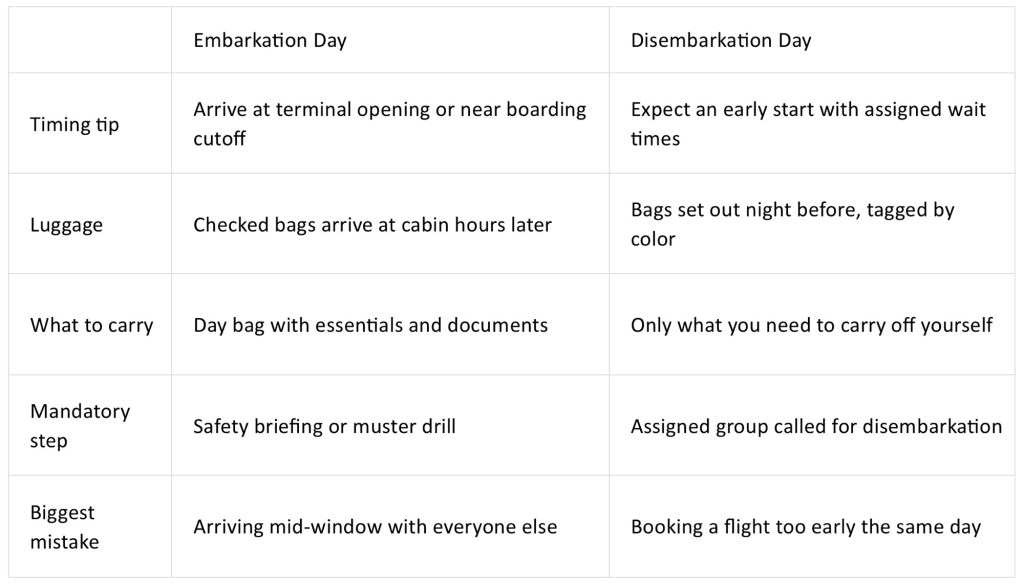
Your checked luggage will not arrive at your door immediately. It can take a few hours, sometimes into the evening, so pack a day bag with your swimsuit, a change of clothes, any medications, and your travel documents so you’re not stuck waiting on your suitcase to start enjoying the ship.
✅ Jani’s Tip: Arriving right when the terminal opens or close to the last boarding window tends to move faster than the middle of the day, when everybody else had the same idea to “beat the rush.”
The Muster Drill
At some point on embarkation day, usually before departure, there’s a mandatory safety briefing, sometimes still called a muster drill, sometimes handled through an app or your stateroom TV depending on the line’s current setup. Either way, it’s not optional, and the crew will track who has completed it. Pay actual attention, note your assigned muster station, and you’re done.
Disembarkation Day: Getting Off
This is the part that surprises first-timers most. Disembarkation morning starts early and involves more waiting than people expect for what feels like it should be a quick goodbye.
The night before, you’ll typically set out your checked luggage with a colored tag in the hallway before a certain cutoff time, and it disappears overnight to be sorted by the crew. In the morning, you keep only what you’re carrying off yourself. Disembarkation happens in groups based on those luggage tag colors or your travel plans, flight versus no flight, so you’ll get an assigned time to head to a lounge or public area and wait to be called.
Breakfast is usually available, but dining venues have limited hours that morning since the crew is also turning the ship around for the next set of guests arriving that same day. Once your group is called, you walk off, find your luggage by tag color in a large terminal area, go through customs if applicable, and you’re done.
✈️ Jani’s Tip: If you have a flight that same day, do not book anything earlier than early afternoon unless the cruise line’s own transfer program guarantees the timing. Between the last morning slowdown and possible customs lines, cutting it close on flight time is where cruise vacations end badly.
What Can Slow Either Day Down
Weather, port authority scheduling, and paperwork issues are the usual culprits. International cruises, especially ones ending in a different country than they started, often mean an extra layer of immigration processing on that last morning that domestic itineraries don’t have. Always confirm what your specific itinerary requires well before the trip, since this varies by cruise line and destination.
Quick Reference
One Last Thing…
Both ends of a cruise run on a schedule that isn’t always intuitive if you’ve never done it before, and a little bit of knowing what to expect goes a long way toward keeping both days calm instead of stressful. I build the timing of flights, transfers, and even which luggage tag color matters into every cruise I book, so my clients aren’t the ones standing in the wrong line wondering what happened.
Ready to have someone handle the timing for you?
XOXO, Jani ~ Personal Travel Advisor | Take Time To Travel, LLC
Updated September 2026. Embarkation and disembarkation procedures vary by cruise line and itinerary, always confirm current details for your specific sailing.
Related Traveler’s Handbook Articles
Cruises


Leave a Reply