CPAP & Other Medical Stuff
In 10 Seconds: Traveling with a CPAP machine, mobility aid, or other medical equipment isn’t complicated once you know the rules, but nobody hands you a manual for it. Here’s what you actually need to know about flying and cruising with medical devices, so you’re not improvising at a security checkpoint or a cabin steward’s desk.
You’ll Learn:
- How CPAP machines move through airport security
- Power access for medical equipment on planes and ships
- What documentation is worth carrying, even when it’s not required
- Other common medical equipment travelers forget to plan around
CPAP Machines and Airport Security
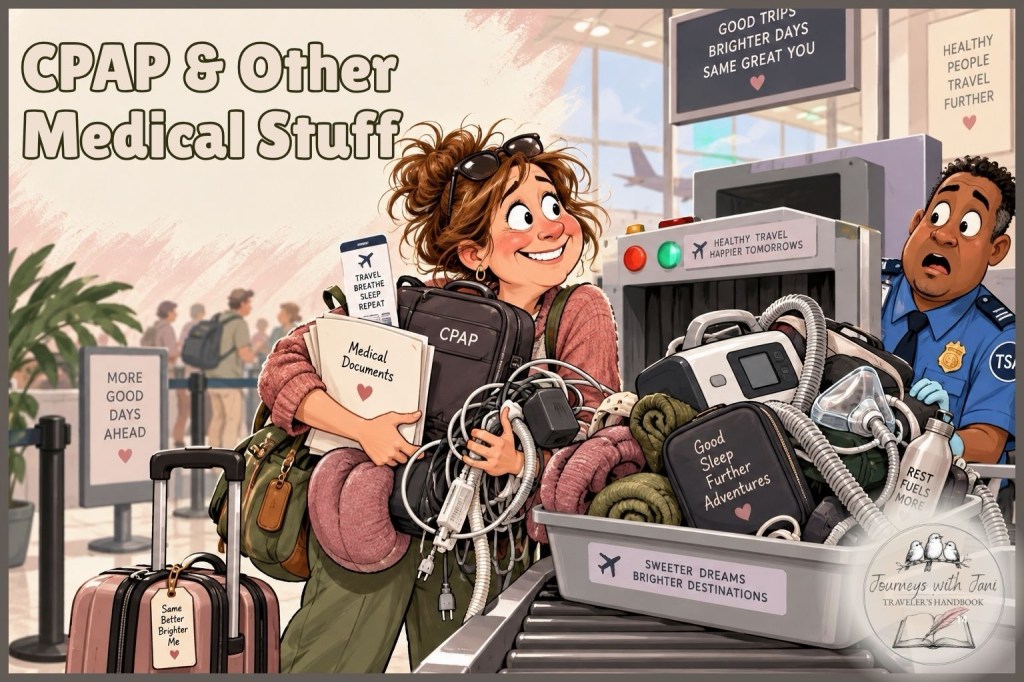
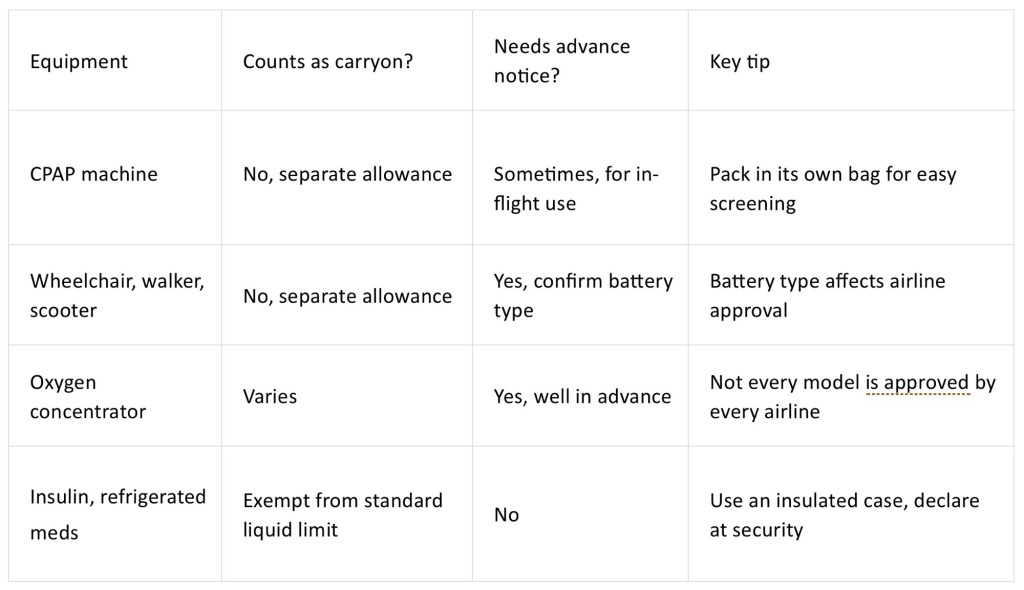
A CPAP machine does not count against your carry-on limit. It is considered medical equipment, and it should stay in its own bag, separate from your regular carry-on, so security can screen it on its own without you having to unpack your whole suitcase on the belt. You will likely be asked to remove it from its case and run it through the X-ray separately, so keep it easily accessible instead of buried at the bottom.
TSA officers may swab the machine or its case for explosive residue testing. That’s routine, not a sign anything’s wrong, just part of how equipment gets cleared. Distilled water for humidifier reservoirs is fine to bring along in a reasonable travel amount, since it’s for medical use, though bringing an empty reservoir and filling it after security is the simplest way to avoid any conversation at all.
😴 Jani’s Tip: Travel size CPAP machines exist and they are a genuine gift to your suitcase space and your patience at security. If you’re still hauling the full size home unit, ask your equipment provider about travel options before your next trip.
Power on Planes and Ships
Most CPAP machines need power at some point during a flight or a long travel day, and airlines generally allow CPAP use onboard, sometimes requiring advance notice, sometimes not, depending on the airline and whether the machine is battery operated or needs to plug in. If you’ll need to use it in flight, call the airline ahead of time and ask directly, don’t assume.
On a ship, cabins typically have standard outlets, and CPAP use is completely normal and expected, no advance notice usually required. If your machine needs a specific voltage or plug type for an international cruise or destination, that’s worth confirming before you pack, the same way you’d check adapters for any other electronics.
Documentation Worth Carrying
A short letter from your doctor describing the equipment and confirming medical necessity isn’t always required, but it can smooth things over fast if a question ever comes up, especially at international checkpoints. Keep a digital copy on your phone and a paper copy in your bag, not just one or the other.
Other Medical Equipment Travelers Forget to Plan Around
CPAP machines get most of the attention, but they’re far from the only equipment that needs a little pre-trip thought.
Mobility devices, wheelchairs, walkers, and scooters generally travel free on flights and don’t count against luggage limits, but battery type matters for airline approval, so check whether yours has a spillable or non-spillable battery before you book. Oxygen concentrators need airline approval in advance, often with specific paperwork, and not every airline allows every model, so this is not a same-week-as-travel phone call.
Insulin and other medications requiring refrigeration travel best in an insulated case with an ice pack, and TSA allows these in carry-on in larger quantities than the standard liquid rule since they’re medically necessary, just declare them at the checkpoint. Diabetic supplies, syringes included, are allowed in carry-on with the medication they belong to.
😴 Jani’s Tip: Whatever the equipment, the golden rule is the same. Call ahead, don’t assume, and never let it be the thing you find out about at the gate.
Quick Reference
One Last Thing…
Traveling with medical equipment feels like one more thing to manage on top of everything else, but it really does get easier once you’ve done it once and know exactly what to expect. I ask about this upfront with every client because the difference between a smooth trip and a stressful one usually comes down to knowing before you go, not figuring it out at the checkpoint.
Ready to plan a trip that works around what you actually need? Let’s talk it through.
XOXO, Jani ~ Personal Travel Advisor | Take Time To Travel, LLC
Updated September 2026. Requirements for medical equipment vary by airline, cruise line, and destination, and TSA and international rules do change. Always verify current requirements directly with your carrier and check official sources before you travel.
Related Traveler’s Handbook Articles
Health
Airport Know-How
 Journeys With Jani: Traveler’s Handbook
Leave a comment